The new SLA website launched in April, and we are looking for all of the members of our PAMily to visit the website and register your accounts. You’ll be able to update your profile with photos and your professional information and you can join the PAM Community group. If you have any problems with logging in or registering your account, contact SLA Membership Director Joel Colon at jcolon@sla.org. He’s happy to help get you started! One item to note – double-check your profile information, as there has been instances of personal information being displayed in the directory.
You can easily replace your personal information in your profile, or click the locks next to fields that you want to hide. The PAM Membership Committee stated that they will be following up on this issue, to see if the default can be changed to display professional information and hide personal information.
It’s halfway through the year and we’re sweltering under heat wave after heat wave. Cool off on Fridays with the PAM Watercooler Zoom call! What better excuse do you have to lock yourself in your COOL, AIR-CONDITIONED office or room and talk about all things STEM Library?? Even better, since this is a Watercooler session, raise a glass of your favorite COLD beverage to your PAMily while you enjoy the company!
Watercoolers are held from 3:30 – 4:30 EST on Fridays.
A question was asked about which databases index preprints. After some back-and-forth, this was the final list that was generated, with much thanks to our PAMily for making this list possible!
If you need help with searching the various PrePrint repositories, here’s a tip sheet that was kindly put together by our colleagues at the University of Victoria in Canada and the University of Minnesota. Thanks to Zahra Premji and Amy Riegelman for your great work!
Scopus: arXiv, ChemRxiv, bioRxiv, medRxiv, SSRN, TechRxiv, and Research Square
Web of Science Core Collection: ChemRxiv, arXiv, bioRxiv, medRxiv and preprints.org. New repositories are also being added.
Compendex: arXiv, SSRN, Research Square, TechRxiv
INSPEC: arXiv, and plans are in place to expand coverage in 2024 – 2025
SciFinder: arXiv, Beilstein Archives, bioRxiv, CERN Document Server, ChemRxiv, medRxiv, Research Square view in Publication Name
Europe PMC and Dimensions have links to many PrePrint servers. Check their lists to see which servers they have. Dimensions has over 50 PrePrint servers that they access, but you will need to create an account with Dimensions (it’s free!) to see their resources.
Katie Frey, the interim Head Librarian for the Wolbach Library, announced in January that the library would be closing in March 2024. In her announcement, she said,
“This is happening outside of the control of anyone in the library. Wolbach Library has been honored to serve the astronomical community, and we truly appreciate our membership in the international astronomical community and collegial relationships.”
We are all deeply saddened to see the end of this valuable resource for the subjects of Astronomy and Astrophysics. The John G. Wolbach Library, which houses the Harvard College Observatory and Smithsonian Astrophysical Observatory collections, dates back to 1975 in its current incarnation, but the roots of the library go back to the 1800s.
Beginning in the 1800s, the Harvard College Observatory and the Smithsonian Astrophysical Observatory developed a rich history of exchanging scholarly works. The Harvard College Observatory library was founded from this exchange. Later, in 1959, the Smithsonian Astrophysical Observatory library was founded when selected astrophysical works were relocated from Washington, D.C. to Cambridge, MA. The two collections were merged in 1975 and the Wolbach Library was born. The latest addition to the library’s holdings, the Harvard College Observatory’s Astronomical Photographic Glass Plate Collection, was added in 2022.
While you raise a glass to the end of this cherished institution, and perhaps listen to an appropriate soundtrack in the background (may we suggest Saying Goodbye from The Muppets or maybe Changes or Space Oddity by David Bowie), we ask if you could write down your memories and thoughts of the Wolbach Library. Once you’ve done that, you can send those memories to Jerrel and Emma by April 30th for inclusion in the Spring edition of the PAM Bulletin.
PAMily member John Kromer published an article in the Journal of Science Education and Technology:
Prosser, E., Kromer, J. Electronic Research Notebooks in the Educational Setting: A Scoping Review. J Sci Educ Technol 32, 697–709 (2023). https://doi.org/10.1007/s10956-023-10065-w
Abstract
Electronic research notebooks (ERNs) are used under a variety of names: electronic laboratory notebooks, digital laboratory notebooks, electronic field notebooks, and electronic engineering logbooks, to name a few. ERNs are common in industry and increasingly common in academia. This scoping review explores the literature describing the various uses and application of ERNs in an educational and teaching context. Using a common search string and eight indices and databases—Scopus, Web of Science, Engineering Village, ERIC, PubMed, LISTA, Scifinder-n, and ASEE—the study identified 38 articles that describe educational and teaching uses of ERNs. The types of ERNs used, the fields in which they were used, and the educational level of their use are explored. Furthermore, the scoping review discusses common advantages and disadvantages of ERNs with respect to paper notebooks as identified by the literature and highlights issues of equity and access that ERNs implicate. Finally, directions for future studies and actions are offered.
Congratulations to PAM President Elect Sarah Siddiqui, one of the Special Library Association’s 2023 JAMES M. MATARAZZO Rising Stars!
Sarah is a STEM Librarian at the University of Rochester’s River Campus Libraries (RCL) where she supports the research needs for the departments of Mechanical Engineering, Earth and Environmental Sciences, and the Laboratory for Laser Energetics. She has been at RCL since fall of 2018 and currently represents the libraries at the university-wide staff council. Sarah joined SLA within a few months of starting her role and became involved in the PAM (Physics-Astronomy-Mathematics) and Upstate NY divisions. She was the treasurer for UNYSLA in 2019 and is the current president-elect for the PAM Community. Within PAM, she helped with planning sessions and moderated the Physics round tables at previous SLA conferences. Sarah received her MS in Information Science from the University at Albany, SUNY and is pursuing her MS in Data Science at the University of Rochester.
Jeffra Bussmann was recently promoted from Associate Librarian to Librarian at California State University, East Bay. She also received approval for, and will be taking a Sabbatical in the Fall 2023 semester, which at CSU East Bay is quite a competitive process.
Congratulations to Jeffra (also part of the team who recently won the 2023 PAM Division Award) from her PAMILY!
Kelly Durkin Ruth has been selected as a scholar for the Institute for Research Design in Librarianship’s (IRDL) 2023 cohort. IRDL is a professional development program for academic and research librarians designed to create a growing community of confident librarian-researchers. More information on the program can be found at https://library.lmu.edu/irdl/. Her research project will focus on how STEM academic librarians without STEM degrees describe their experiences working with faculty, students, and staff.
Alison Verbeck will be retiring from the Washington University in St. Louis Libraries on July 31, 2023.
She started as the Physics Librarian in 1998 after serving as the Technical Librarian at her local electric utility company for 13 years. After being an employee of the Department of Physics for most of her career, the Library became her primary employer 4 years ago. Since then, Alison has had four supervisors and a series of changes in her position. She will be leaving her position as the Physics, Astronomy, Mathematics, Data and Statistics Librarian, as well as the Webmaster and Communications Coordinator for the Department of Physics. She will be assuming a new position at Washington University, working for the McDonnell Center for the Space Sciences as Communications Coordinator.
Alison joined SLA in 1983 while in library school, and has loved the interactions with the St. Louis Chapter members, but especially with the PAM Division (Community), having served as:
Treasurer (twice for each),
Director (PAM),
and Membership Chair (for each) over the years.
Because Alison will be staying at Washington University for a few more years, her email address will stay the same. The new position will allow her to work from home, or from her daughter’s home, where she can spend time with her two little granddaughters in California.
Jeffra Bussmann, Isabel Altamirano, Nastasha Johnson, Gr Keer, and Sam Hansen published the final column on Capstone social justice concepts in their special series on Science Librarianship and Social Justice. We hope that you will use these articles to not only enhance your understanding but also to take action and make a positive impact at your library, especially for those with less privilege. Additionally, Jeffra has converted the articles into a LibGuide for science faculty and students that is open to the LibGuides community to copy, modify, and include in your LibGuides collection. Feel free to contact Jeffra (jeffra.bussmann@csueastbay.edu) if you have any questions about this process.
As many of us are aware, the Hathi ETAS was launched shortly after the beginning of COVID-19, and lasted through August of 2021. The service was designed to help researchers and students continue their access to “in copyright” content during the pandemic as libraries were closed, or open with limited hours. For those universities that left the service on from April 2020 through August 2021, HathiTrust was able to supply those institutions with use data.
Indiana University has strong programs in music, languages, area studies, and the humanities in general, so it was no surprise that those subject areas dominated the top 300 books accessed by IU logins. Like most libraries, the distribution of use of materials during a fixed time frame, when graphed, resulted in a pareto diagram, with a small number of titles getting very high, regular use, with a long tail of infrequently used or low demand titles.
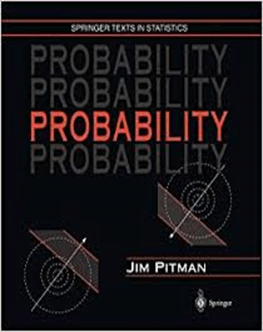
The first science or math to show up was the 18th most heavily accessed book, “Probability” by Jim Pitman. This book is regularly used as a text for courses, and has been a Reserve print book at IU for several semesters. It was accessed by 60 different IU users across IU campuses, with 108 online renewals.
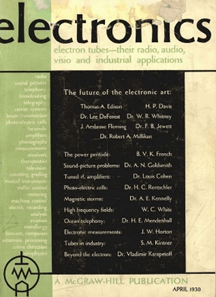
The 30th most heavily used resource was the old journal run “Electronics”, with 48 unique IU users accessing, and 3 renewals. This is also a reminder that the Hathi ETAS did not simply include online books, it also included online journals, book sets, and book series.
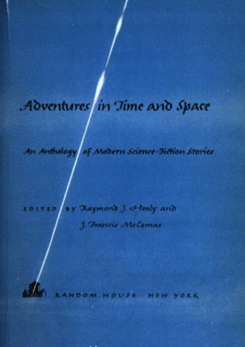
At number 79 on our list was a 1946 “Adventures in Time and Space”, an anthology of modern science fiction stories, with 30 unique users and 6 renewals.
There is no doubt that other science monographs were heavily used online during the covid pandemic, it is just that IU users enjoyed access through means other than Hathi Emergency Access. It is most likely that heavily used mathematics and computer science was delivered to students by digital libraries held by IU such as Skillport, the platform for the extremely high demand 3rd edition of Cormen’s “Introduction to Algorithms” (MIT Press). Others were presented to students via Proquest Ebook Central, EBSCO, and other providers.
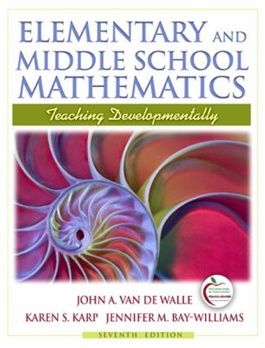
The next mathematics book on the list (182nd, with 19 unique users and 9 renewals) was Elementary and Middle School Mathematics, by Van de Walle, Karp, and Bay-Williams. Again, this text was most likely required reading for School of Education students preparing to teach K-8 mathematics.
Below is a listing of the top 10 books access by IU users ranked according to number of unique IDs viewing. There is no question that permitting access to these titles during the pandemic was a great benefit to both the institution, and the students and researchers working here. If you have questions, or if your university made use of Hathi ETAS through last fall, and you have access to the use data and would like to compare or contrast your experiences with Indiana University, please feel free to contact me.
Top 10 Most Heavily Used ETAS Books by Indiana University
Title
Publisher / Year
Author
Unique IU Logins
Renewals
Creating Black Americans : African-American history and its meanings, 1619 to the present
Oxford Univ Press / 2006
Nell Irwin Painter
406
222
The encyclopedia of popular music
Oxford Univ Press / 2006
Colin Larkin
354
830
Conversation in the cathedral
Harper & Row / 1975
Mario Vargas Llosa
107
69
The new Rolling stone record guide
Random House / 1983
Dave Marsh, John Swenson
103
52
Love Medicine : a novel
Bantam Books / 1984
Louise Erdrich
96
89
Reading Modern Russian
Slavica Publishers / 1979
Jules F. Levin and Peter D. Haikalis, with Anatole A. Forostenko
93
50
Island of Dr. Moreau
Penguin/ 2005 [1896]
H.G. Wells
86
70
Dark continent : Europe’s twentieth century
A.A. Knopf / 1999
Mark Mazower
84
64
Chopin at the boundaries : sex, history, and musical genre
Harvard Univ Press / 1996
Jeffrey Kallberg
80
48
Engaging art : the next great transformation of America’s cultural life
Palumbo, Laura Bolton, Jeffra D. Bussmann, and Barbara Kern. “A View from the Top: Library Leaders’ Predictions for the Future of Science Liaison Librarianship.” Library Leadership & Management 36, no. 1. https://journals.tdl.org/llm/index.php/llm/article/view/7511
 PAM Bulletin